


 Enquire
 Call
Call
 chat
chat

why india
The Preferred Investment Destination for Global NRIs
India stands at the forefront of global growth. A nation defined by ambition, innovation and transformation. As this dynamic growth story unfolds, Lodha gives you the opportunity to own landmark residences that celebrate refined living and shape your family’s legacy, wherever you are in the world.
why lodha
Creators of the World’s Finest Developments
As India’s most trusted developer*, we have a legacy of delivering the world’s finest developments.
From India’s most coveted residences on Billionaires’ Row
in Mumbai, to the world’s most exclusive address in
Mayfair London, our developments exemplify thoughtful
design and craftsmanship, complemented by warm
hospitality, offering a truly
world-class lifestyle.
KEY FACTS
Delivering Excellence with Continued Growth
-
40+
Year Legacy
London, Mumbai, Pune,
Bengaluru and Delhi NCR
-
112
Million Sq.Ft. Delivered
-
132
Million Sq.Ft. in the Pipeline
London, Mumbai, Pune,
Bengaluru and Delhi NCR
As of March 2026 | By residential sales FY14 – 26

OUR SIGNATURE SERVICES
Elevating the Everyday
Our in-house hospitality professionals trained by the world’s best hotels and service brands, curate experiences with care and intention, anticipating needs before they are expressed and going the extra mile to ensure every moment feels personal and intuitive.
GLOBAL RECOGNITION
Lodha Named Among the World’s Most Trusted^
Only 18 real estate companies feature on Newsweek’s World’s Most Trustworthy Companies 2025 list — a global ranking of the top 1,000 organisations across industries. Just one is Indian.

PRIVILEGES
Tailored for
Global Indians
-
Dedicated NRI
advisors -
Exclusive loyalty
privileges -
Effortless leasing
services -
All-in-one
home assistance -
Simplified financing
solutions
OUR PRESENCE
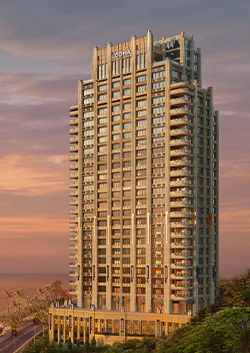
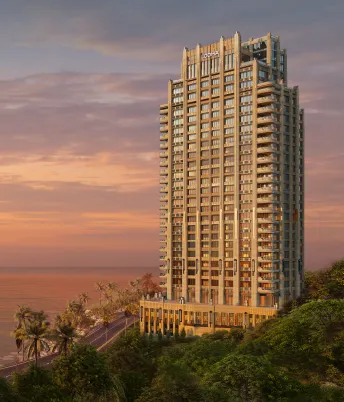
Iconic Developments

Inside Lodha







Most Common Queries
Who is a Non-Resident Indian (NRI)?
An Indian citizen who stays abroad for employment/carrying on business or vocation outside India or stays abroad under circumstances indicating an intention for an uncertain duration of stay abroad is a non-resident Indian - NRI. (Persons posted in U.N. organisations and officials deputed abroad by Central/State Governments and Public Sector undertakings on temporary assignments are also treated as non-temporary assignments are also treated as non-residents). Non-resident foreign citizens of Indian origin are treated on par with non- resident Indian citizens (NRIs).
Who is a PIO?
A person of Indian origin means an individual (not being a citizen of Pakistan or Bangladesh or Sri Lanka or Afghanistan or China or Iran or Nepal or Bhutan) who:
1. held an Indian Passport at any time, or
2. who or whose father or paternal grandfather was a citizen of India by virtue of the Constitution of India or the Citizenship Act, 1955
What is OCI?
The Overseas Citizenship of India (OCI) is an immigration status permitting a foreign citizen of Indian origin to live and work & in the Republic of India indefinitely.
Can NRIs buy real estate properties in India?
Yes. NRIs can buy and sell residential and commercial properties in India.
Is there any restriction on the number of properties NRIs can buy in India?
There is no restriction on the number of residential or commercial properties an NRI can own in India. However, for NRIs buying property in India, the law restricts NRIs from purchasing any kind of agricultural land/ plantation property/ farm house in India.
Can NRIs acquire commercial properties in India?
Yes, under the general permission granted by the Reserve Bank, property other than agricultural land/farm house/plantation property can be acquired by NRIs provided the purchase consideration is met either out of inward remittances in foreign exchange through normal banking channels or out of funds from the purchaser's NRE/FCNR accounts maintained with banks in India and a declaration is submitted to the Central Office of Reserve Bank in form IPI 7 within a period of 90 days from the date of purchase of the property/final payment of purchase consideration.
Can NRIs buy properties in India without the Reserve Bank’s permission?
Reserve Bank has granted general permission to foreign citizens of Indian origin, whether resident in India or abroad, to purchase immovable property in India for their bona fide residential purpose. They are, therefore, not required to obtain permission of Reserve Bank.
What are the kind of properties an NRI/PIO cannot buy?
An NRI/PIO cannot usually buy agricultural land/plantation property/farm houses in India. Proposals to buy such a land have to be specifically approved by RBI, in consultation with Government of India. The only way they can acquire an agricultural land is by inheritance.
Can NRIs buy property in India acquire or dispose residential property by way of gift?
Yes, the Reserve Bank has granted general permission to NRIs to acquire or dispose of NRI India Properties by way of gift from or to a relative who may be an Indian citizen or a person of Indian origin (PIO) whether resident in India or not.
Can NRIs obtain loans for acquisition of a house/flat for residential purposes from financial institutions providing housing finance?
The Reserve Bank has granted some general permission to certain financial institutions providing housing finance e.g. HDFC, LIC Housing Finance Ltd., etc, and authorized dealers to grant housing loans to NRI nationals for acquisition of a NRI house/flat for self-occupation subject to certain conditions. Criteria regarding the purpose of the loan, margin money, and the quantum of loan will be at par with those applicable to resident Indians. Repayment of the loan should be made within a period not exceeding 15 years, out of inward remittance through banking channels or out of funds held in the investors' NRE/FCNR/NRO accounts.
What is the Tax treatment for income generated from property selling or renting for NRI/PIO/OCI?
The mere acquisition of property does not attract income tax. However, any income accruing from the ownership of it, in the form of rent (if it is let out)/annual value of the house (if is not let out and it is not the only residential property owned by that person in India) and/or capital gains (short term or long term) arising on the sale of this house or part thereof is taxable in the hands of the owner.
Does Capital Gains Tax (CGT) apply to NRI / PIO / OCI?
Yes. Long-term and short-term capital gains are taxable in the hands of non-residents.
How does Double Taxation Avoidance Agreement work in case of NRIs?
In case of sale of an immovable property, the Double Tax Avoidance Agreement (DTAA) with most countries state that capital gains will be taxed in the country where the immovable property is situated. Hence, if an NRI owns immovable property in India, then he/she will be subject to pay tax in India on the capital gains which arise on the sale of the property. Similarly, letting of immovable property in India would be taxed in India under most tax treaties.
What is FEMA?
FEMA is a law that governs how NRIs can buy residential and commercial properties but not farmland or plantations without RBI approval. Payments must be made through proper bank channels, and rules apply if they want to send money back after selling. It ensures all transactions are legal and transparent.
Can NRIs buy property jointly?
Yes, joint ownership is permitted with another NRI/OCI, or with a resident Indian.
Can NRIs repatriate funds after selling property?
Yes, up to $1 million per financial year (after tax and repatriation compliance), from proceeds of sales of property purchased as per FEMA rules.
Which cities is Lodha present in India?
Lodha has a presence across India including the Mumbai Metropolitan Region, Pune, and Bengaluru, with upcoming developments in Delhi NCR.
Which other cities in India is Lodha coming up in?
Lodha has upcoming projects in Delhi NCR.
Does Lodha have developments outside India?
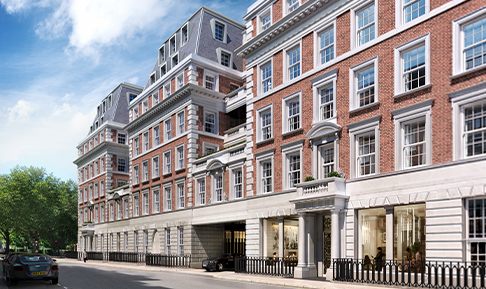
Yes. Lodha has an established presence in London, with developments including No.1 Grosvenor Square in Mayfair, Holland Park Gate in the Royal Borough of Kensington and Chelsea, and Lincoln Square in central London, across some of the city’s most prestigious neighbourhoods.
Does Lodha have a dedicated NRI team outside India?
Yes. Lodha has dedicated NRI representatives based in Dubai.
Does Lodha have an office outside India?
Yes. Lodha has a registered office in Dubai at Conrad Business Towers.
How can NRIs connect with Lodha from overseas?
NRI customers can connect with us through the enquiry and live chat options on our website.
Does Lodha offer dedicated privileges for NRI customers?
Yes. Lodha extends dedicated support and offerings for NRI customers, including relationship advisors, loyalty privileges, leasing services, financial solutions, and home management support.
Terms & conditions
*Newsweek’s World’s Most Trustworthy Companies List 2025
^Over 2,00,000 companies across the globe were evaluated for Newsweek’s World’s Most Trustworthy Companies in 2025. Only 1,000 made the cut. Just 18 in real estate. Only 1 is from India.
Corporate Office: One Lodha Place, near Lodha World Towers, Senapati Bapat Marg, Mumbai – 400 013
All Lodha projects are registered under the relevant RERA authority, as applicable across states. All projects in Maharashtra are registered via the MahaRERA registration and is available on the website https://maharera.maharashtra.gov.in/ under ‘Registered Projects’. All projects in Karnataka are registered under the Karnataka Real Estate Regulatory Authority (RERA); details are available at www.rera.karnataka.gov.in under ‘Registered Projects’.
- Home
- NRI